
Key takeaways
- A good pinkish cream softens dark, uneven patches by supporting your skin's natural renewal rather than bleaching it.
- Patch test first, apply a thin layer to clean skin, and give it time instead of piling on more product.
- Surface dark spots usually fade over 6 to 12 months, so steady daily use beats a quick fix.
- Daily sunscreen is the single biggest thing protecting your results, since SPF 30 blocks 97 percent of UVB rays.
If dark patches, old acne marks or an uneven glow have you reaching for something gentle, a pinkish cream is one of the easiest places to start. It works slowly and kindly, softening tone over time instead of forcing a dramatic change your skin may not thank you for.
This guide walks you through what a pinkish cream actually does, how to use it without irritation, and how long real results take. No hype, no empty promises. Just practical steps you can follow tonight.
What a Pinkish Cream Does for Dark, Uneven Areas
Think of a pinkish cream as a daily nudge toward balance. Most formulas are designed to brighten and soften areas that have gone darker than the rest of your skin: old acne marks, sun spots, dull patches, and the naturally deeper areas like underarms and knees.
Here is the simple version of what is happening underneath.
Your skin is always renewing itself. Older, pigment-heavy cells rise to the surface and shed, and fresh cells take their place. A pinkish cream supports that cycle while helping to calm the overactive pigment that makes certain spots look darker.
So instead of one bright area and one dark area fighting for attention, the whole surface starts to look more even. That is the real goal here. Not a different skin color, just a smoother, more consistent one.
A few things a quality pinkish cream can help with:
- Softening post-acne marks that linger after a breakout heals
- Evening out dullness on the cheeks, forehead or chin
- Brightening naturally darker zones like the neck, elbows and knees
- Giving tired skin a fresher, more awake look
If your main concern is overall dullness rather than specific spots, a gentle brightening routine built around daily use is a helpful companion approach.
How It Evens Tone Without Harsh Bleaching
Here is the part that matters most. A pinkish cream and a harsh bleaching cream are not the same thing, even though both promise brighter skin.
Harsh bleaching products often strip the skin or suppress pigment aggressively. That can leave skin thin, sensitive, blotchy, or worse over time. You might get a fast result, then pay for it later with redness and irritation.
A gentle pinkish cream takes the slower road on purpose.
Rather than attacking your pigment, it works with your skin's natural renewal. It encourages tired surface cells to turn over and helps keep new pigment from clustering into dark patches. Many formulas also carry soothing and moisturizing ingredients, so your skin stays comfortable while it evens out.
That gentleness is the whole point. When a product is kind to your skin barrier, you can keep using it long enough to actually see change. Harsh products often get abandoned within days because they sting, flake or redden the skin.
One ingredient worth knowing by name is niacinamide, a form of vitamin B3 found in many gentle brightening creams. It helps reduce the look of dark spots while calming the skin rather than irritating it. Other K-beauty heroes like snail mucin and Centella work on the same soothing principle, supporting your skin while it evens out.
The takeaway is simple. Gentle and steady wins here. Fast and harsh usually backfires.
Where and How to Apply It Safely
Getting the application right is half the battle. The good news is that it takes about a minute once you build the habit.
Start with a patch test
Before you spread any new cream across your face, test it first.
- Dab a small amount on your inner forearm or behind your ear.
- Wait 24 hours.
- If you see no redness, itching or stinging, you are good to go.
This one small step saves a lot of regret, especially if your skin runs sensitive.
Your step-by-step application
Once you have passed the patch test, keep it simple.
- Cleanse first. Always apply to clean, dry skin. A pinkish cream cannot do its job through a layer of oil, sweat or sunscreen.
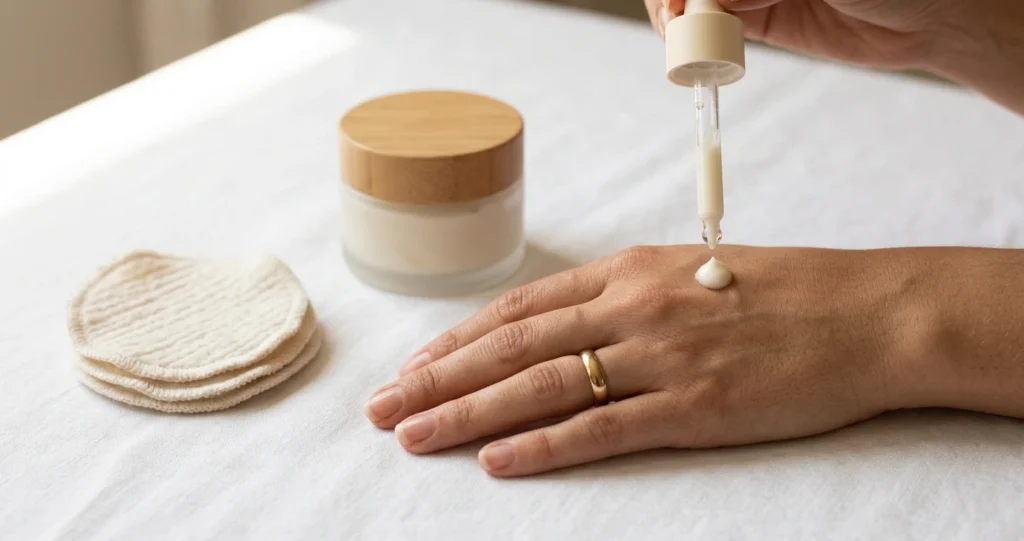
- Use a thin layer. A little goes a long way. Piling it on does not speed up results, it just wastes product and raises the chance of irritation.
- Dab, do not drag. Gently press and pat the cream into the darker areas rather than rubbing hard.
- Let it absorb. Give it a minute to sink in before you layer anything else or head to bed.
Where you can use it
A pinkish cream is not only for the face. Common spots include:
- The face, especially cheeks and forehead
- The neck, which often looks darker than the face
- Underarms
- Knees and elbows
- The backs of the hands
Patch test each new area the first time, and always keep the layer thin.
A quick note on timing
Many people prefer applying brightening products at night, when skin does most of its repair work. A dedicated night cream fits neatly alongside a pinkish cream routine, since both support your skin while you sleep.
If you do use it in the morning, sunscreen on top is non-negotiable. More on that shortly.
Realistic Results and How Long They Take
Let us set honest expectations, because this is where most people get discouraged and quit too early.
Skin change is slow by nature. Your surface cells take weeks to turn over, so a cream cannot rewrite your tone overnight no matter what the label promises.
Here is a realistic timeline most people can expect:
- First 2 to 4 weeks: Skin often looks a little fresher and better hydrated. Dark areas may start to look slightly softer.
- 4 to 8 weeks: With daily use, uneven tone usually begins to even out in a visible way. This is often when friends start asking what you have changed.
- Several months: Surface dark spots continue to fade with steady use.
How long for a specific dark spot to fully fade? According to the American Academy of Dermatology, a spot that is a few shades darker than your natural skin color will usually fade within 6 to 12 months. Deeper or older pigmentation can take longer.
That number is worth remembering, because it reframes the whole process. You are not failing if a mark is still there at week six. You are right on schedule.
A few things that speed results along:
- Using the cream daily without skipping
- Wearing sunscreen so new sun damage does not undo your progress
- Being gentle with your skin overall, no harsh scrubbing
And a few things that slow you down:
- Picking at acne, which creates fresh marks
- Skipping sunscreen
- Switching products every two weeks before any of them have a chance to work
Consistency is quietly the most powerful ingredient in your whole routine.
Pairing Pinkish Cream With Gentle Cleansing
A pinkish cream works best as part of a calm, simple routine. Overloading your skin with ten products is a common mistake that often causes more irritation than it solves.
Start with cleansing, because everything else builds on clean skin.
Keep your cleanser gentle
Harsh, squeaky-clean cleansers strip your skin barrier and can make dark patches look worse. Look for a mild, non-stripping cleanser that leaves your skin soft rather than tight.
A simple daily flow looks like this:
- Morning: Gentle cleanse, pinkish cream (if using in the day), moisturizer, sunscreen.
- Night: Gentle cleanse, pinkish cream, moisturizer.
That is genuinely enough for most people. If you want to add a toner to prep your skin and help the cream absorb, apply it right after cleansing and before your pinkish cream so each layer sinks in properly.
Do not over-exfoliate
It is tempting to scrub hard when you want brighter skin faster. Resist it.
Too much exfoliation inflames the skin and can trigger more pigment, which is the opposite of what you want. Gentle cleansing plus a steady pinkish cream will carry you much further than aggressive scrubbing ever will.
If you live somewhere hot and humid like much of Sri Lanka, keeping your products fresh matters too. Heat can degrade creams faster, so store yours away from direct sunlight and bathroom steam to keep it performing as it should.
Why Sunscreen Is the Partner Your Cream Needs
If you only take one thing from this entire guide, make it this: sunscreen protects every bit of progress your pinkish cream earns.
Sun exposure is one of the biggest drivers of dark spots and uneven tone. You can use the gentlest, most effective cream in the world, and the sun will quietly undo it if your skin is unprotected.
The numbers make the case clearly. The American Academy of Dermatology notes that SPF 30 blocks 97 percent of the sun's UVB rays. That small daily habit does more to protect your even tone than almost anything else in your routine.
A few simple sunscreen rules:
- Apply it every morning, even when it is cloudy or you are mostly indoors near windows.
- Use enough. A thin, stingy layer does not give you the protection on the label.
- Reapply through the day if you are outside, sweating or swimming.
Sri Lanka's strong, year-round sun makes this especially important. If you are not sure which type to choose, our post on why K-beauty SPF wins for Sri Lanka's climate helps you pick a formula that feels good enough to actually wear daily.
Pair your pinkish cream with daily sunscreen and you have the two halves of an even-tone routine working together. One fades what is already there, the other stops new damage from forming.
Common Mistakes That Quietly Stall Progress
Most people who feel their cream is not working have not picked a bad product. They have slipped into a habit that cancels out the results. Here are the ones we see most often.
Quitting too early. This is the big one. If you stop at week three because the mark is still there, you walked away right before the visible stage. Give any pinkish cream at least eight weeks before you judge it.
Using too much. A thick layer does not work faster. It often sits on the skin, feels greasy, and raises the chance of clogged pores or irritation. A thin, even layer is all your skin can actually absorb.
Skipping on busy days. Brightening relies on daily, repeated nudges. A few skipped days each week stretches your timeline out by months. Keep the jar somewhere you will see it so the habit sticks.
Treating the symptom, not the cause. If you keep getting fresh dark marks, something upstream may be driving them. Frequent breakouts, picking at spots, or constant sun exposure will keep feeding new pigment faster than your cream can fade it. Calm the cause first.
Mixing too many strong actives at once. Layering a pinkish cream with several other potent products can overwhelm your skin barrier. When the barrier is irritated, pigment often gets worse. Keep your routine simple and let the cream do its work.
One more quiet trap: expecting the same result on every body part. Tougher areas like knees and elbows have thicker skin and usually take longer to respond than your face. That is normal, so adjust your patience accordingly.
Who a Pinkish Cream Suits Best
Not every product fits every person, so it helps to know where a pinkish cream shines.
You are likely a good match if:
- You have post-acne marks that have left your skin looking patchy.
- Your tone looks dull or uneven and you want a gentle lift.
- You have naturally darker areas like underarms, knees or elbows you want to soften.
- You have tried harsh whitening products before and your skin reacted badly.
- You prefer a slow, steady approach over an aggressive one.
It may be less ideal, or need extra care, if:
- Your skin is very reactive. Start slow, patch test, and use it every other day at first.
- You have active, deep pigmentation conditions. In that case, a dermatologist's input is worth it before you start.
If you are brand new to building a routine and unsure where a pinkish cream fits, start by matching any product to your skin type. Dry, oily and combination skin each respond a little differently, so choose a formula that suits yours.
The honest summary is that a pinkish cream is one of the friendlier entry points into brightening skincare. It asks little and rewards patience.
Getting Started With Onlinebeautybar
Ready to give your skin a gentle nudge toward even tone? The best next step is to start simple and stay consistent.
Pick one pinkish cream, patch test it, and use it daily alongside gentle cleansing and sunscreen. Then let it work. Resist the urge to switch products every fortnight or to scrub harder when you want faster results.
At Onlinebeautybar, we stock Korean-inspired brightening creams made to even tone gently, without the harshness of aggressive bleaching formulas. We deliver island-wide across Sri Lanka, with affordable, installment-friendly pricing in LKR, so you can build your routine without stretching your budget.
Browse our pinkish cream and brightening range on onlinebeautybar.lk, start your routine tonight, and give your skin the weeks it needs to show you what gentle, steady care can do.
Frequently asked questions
Is pinkish cream a bleaching cream?
No. A well-made pinkish cream works with your skin's natural renewal to soften dark areas gradually. It does not strip or bleach the skin the way harsh whitening products can.
How long before I see results from pinkish cream?
Most people notice softer, more even tone within a few weeks of daily use. Surface dark spots usually take 6 to 12 months to fade fully, so consistency matters more than speed.
Can I use pinkish cream during the day?
Yes, but always layer sunscreen over it before you go outside. Sun exposure can undo your progress and even make dark patches worse.
Where can I use pinkish cream?
You can use it on the face and on common dark areas like underarms, knees, elbows and the neck. Patch test each new area first and keep the layer thin.