
Key takeaways
- A morning skincare routine protects skin from the day ahead; keep it to five quick steps: cleanse, tone, treat, moisturise, and sunscreen.
- Daily sunscreen is the single highest-value step. Regular SPF 15+ use cuts melanoma risk by 50 percent (Skin Cancer Foundation).
- Choose lightweight, fast-absorbing products in Sri Lanka's humidity so layers do not pill or feel heavy under sunscreen.
- Habits take a median of 66 days to stick (range 18 to 254), so judge your routine over weeks, not days.
A morning skincare routine is the short set of steps you do after waking to clean, protect, and prep your skin for the day. The version that lasts is simple: five quick steps you can finish before your tea goes cold. Most routines fail because they are too long, too fussy, or built around products that feel heavy in Sri Lanka's heat.
So let's build one you will actually keep. This guide walks through why mornings call for a different approach than nights, a fast 5-step AM routine, how to pick lightweight products that suit our humidity, and how to make the whole thing stick when you are running late.
Why Morning Skincare Focuses on Protection
Morning care defends your skin against the day. Sun exposure is the biggest reason skin shows its age: an estimated 80 percent of visible skin aging in Caucasian women is caused by the sun (Skin Cancer Foundation, citing Flament et al., 2013). In a sunny, high-UV country like Sri Lanka, that number is a loud reminder that daytime is defence time.
Think of it this way. At night, your skin is in recovery mode. There is no sun, no pollution, no sweat from a Colombo commute. That is when rich creams and stronger active ingredients do their best work.
Mornings are the opposite. Your skin is about to meet UV rays, heat, dust, and humidity. So your AM products should shield and lighten the load, not sit heavy on your face.
That single shift changes everything. You reach for lighter textures in the morning and save the heavier repair steps for bedtime. If you want the full breakdown of which cream belongs where, our guide on night cream versus day cream covers it step by step.
Here is the useful part: because mornings are about protection, the routine can be short. You are not undoing damage at 7 a.m. You are preventing it.
The Quick 5-Step Morning Skincare Routine
A good morning skincare routine needs only five steps, and it fits into five minutes. The order matters more than the number of products. Apply thinnest to thickest so each layer absorbs before the next goes on.

Here is the sequence:
- Cleanse. A gentle facewash removes the sweat and oil that built up overnight. In the morning you usually do not need a heavy double cleanse, since there is no makeup or sunscreen to lift off. A splash of water with a mild cleanser is enough.
- Tone. A hydrating or polishing toner resets your skin's surface and preps it to drink in what comes next. Pat it in with your hands.
- Treat. This is your optional serum step. A lightweight vitamin C serum is a classic morning pick because it works with sunscreen to fight daily damage.
- Moisturise. A light, fast-absorbing moisturiser locks in hydration without the greasy feel.
- Sunscreen. Always last, always daily. This is the step that protects everything underneath.
You can trim this on rushed days. The two steps you should never skip are moisturiser and sunscreen. Everything else is a bonus.
Not sure what a toner even does? It is just a light liquid that rehydrates and preps your skin after cleansing. Choose one that matches your skin type rather than the most expensive bottle on the shelf.
Choosing Lightweight Products for Sri Lanka's Humidity
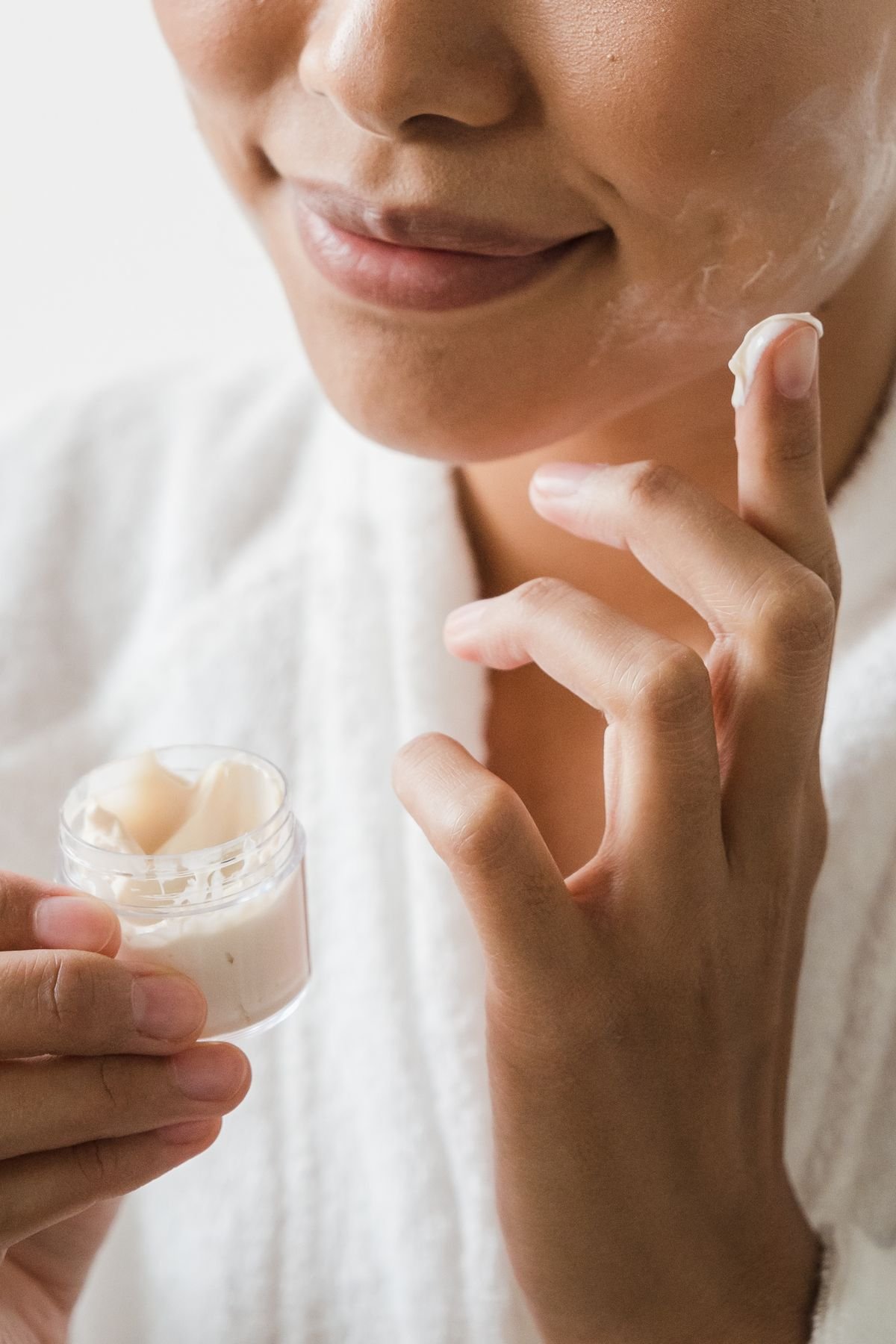
In humid weather, lightweight products decide whether a routine lasts or gets abandoned by Wednesday. Heavy creams trap heat and sweat, which makes layers slide, pill, or feel sticky under sunscreen. Lighter textures sit flat and absorb fast.
A few simple swaps go a long way:
- Moisturiser: reach for gel or water-based formulas over thick balms. They hydrate without the heavy film.
- Serum: pick watery, quick-drying textures. If a serum takes ages to sink in, it is too rich for a Sri Lankan morning.
- Cleanser: a gel or foaming facewash rinses clean without leaving residue that heat can turn greasy.
- Sunscreen: gel and fluid sunscreens feel far lighter than creamy ones in the tropics.
The goal is skin that feels comfortable by mid-morning, not shiny or suffocated. If your face feels heavy an hour after your routine, your products are probably too rich for the climate.
This is exactly the humidity problem we see with local customers, and it is why Korean-style formulas have caught on here. They tend to be designed for light, layerable textures that suit a tropical climate.
At Onlinebeautybar, the Magical and Luxury Glow ranges were built with this in mind, with toners and facewashes that absorb fast rather than sit on top of the skin. That matters more here than any fancy ingredient list.
The Role of Antioxidants and Sunscreen in the Morning
Antioxidants and sunscreen are the two steps that make a morning routine worth doing. Sunscreen blocks the UV that causes most visible aging, and antioxidants mop up the damage that slips through. Daily SPF 15+ use is linked to 24 percent less visible skin aging than skipping it (Skin Cancer Foundation, citing Hughes et al., 2013).
Let's break down each one.
Why sunscreen is the non-negotiable step
Sunscreen is the highest-value thing you can do for your skin, full stop. Regular daily use of SPF 15 or higher reduces the risk of developing melanoma by 50 percent (Skin Cancer Foundation, citing Green et al., 2011). That is a serious payoff for 15 seconds of effort.
Yet people skip it constantly. A 2025 survey from the American Academy of Dermatology found that only about half of Americans use sunscreen regularly, and nearly 1 in 4 did not know sunscreen helps prevent early skin aging (American Academy of Dermatology, 2025). If people in cooler climates skip it, the temptation is even greater here, where the heat makes sunscreen feel like one more sticky layer.
The fix is a lighter sunscreen you do not mind wearing. Apply it every single morning, even indoors, because UV passes through windows. Reapply if you are out for long stretches.
What antioxidants like vitamin C add
Antioxidants are the backup singers to sunscreen's lead vocal. An antioxidant is simply an ingredient that neutralises the unstable molecules UV and pollution create, which otherwise speed up dullness and dark spots. Vitamin C is the best-known one and a staple morning serum.
Used together, a vitamin C serum under sunscreen gives you protection plus brightening. Over weeks, that combination is one of the gentlest ways to fade uneven tone. If pigmentation is your main worry, look for serums with vitamin C, niacinamide, or arbutin, which target dark spots without harsh peeling.
One rule: apply antioxidants before sunscreen, never after. Sunscreen is always the final layer.
Making the Routine Stick on Busy Mornings
The routine that lasts is the one you can do half-asleep. Habits take time to form: research found a median of 66 days, with a wide range from 18 to 254 days depending on the person and the habit (University of Surrey, 2026). So judge your routine over weeks, not mornings.
That long window is good news. It means a missed day does not reset your progress. Consistency over time beats a perfect streak.
A few tricks make the steps automatic:
- Stack the habit. Do your routine right after brushing your teeth, so an existing habit cues the new one.
- Keep products visible. Line them up on the sink in order. Out of sight really is out of mind.
- Have a 60-second version. On frantic mornings, drop to just moisturiser and sunscreen. Two steps beat zero.
- Pre-decide your products. Decision fatigue kills routines. When your five items are set, there is nothing to think about.
The researcher behind the 66-day figure, Dr. Pippa Lally, has stressed that 66 days was an average, not a fixed target for everyone (University of Surrey, 2026). Some people lock in a habit in under three weeks. The point is to keep going, not to count days.
If building a routine from scratch feels like a lot, start with a small beginner-friendly set rather than ten products at once.
A Simple Morning Routine for Beginners on a Budget
A beginner morning skincare routine can start with just three products: a facewash, a moisturiser, and a sunscreen. You can add a toner and serum later once the basics are a habit. Starting small is the single biggest reason routines survive past the first month.
Buying everything at once is where budgets and motivation both break. Pick the two non-negotiables first, moisturiser and sunscreen, then build outward as you go.
Here is a sensible order to add products:
- Moisturiser and sunscreen (week one)
- A gentle facewash (once those feel automatic)
- A toner for a little extra hydration
- A vitamin C serum, if brightening is a goal
If you want a ready-made shortlist, a small set of affordable K-beauty basics is a gentle place to start. Keep it cheap and simple: a facewash, a light moisturiser, and a sunscreen you like.
Onlinebeautybar's combo packs suit this approach, since they bundle the core steps together at installment-friendly prices in LKR with island-wide delivery. That lets you start a full routine without a big one-time spend.
How Your Morning and Night Routines Work Together
Your morning and night routines are two halves of the same plan: protect by day, repair by night. The AM routine shields you from sun and pollution, while the PM routine does the deeper work of cleansing off the day and feeding your skin richer ingredients. Neither alone does the full job.
A quick comparison makes it clear:
- Morning: lighter textures, antioxidants, sunscreen. Fast and protective.
- Night: double cleanse, richer creams, stronger actives. Slower and restorative.
The night steps are where you can afford to go heavier, since there is no sunscreen to layer over and no sweat to fight. That is the right time for a proper cleanse to remove the day's sunscreen and grime, which is why the Korean double cleansing method belongs to your evenings, not your mornings.
Get both halves working and your skin stays protected and repaired on a loop. The morning keeps damage out; the night fixes what got through. That rhythm, kept up over weeks, is what actually changes how your skin looks.
Common Morning Routine Mistakes to Avoid
Most morning routines fail for the same handful of reasons, and all of them are easy to fix. The biggest one is skipping sunscreen on cloudy or indoor days, which quietly undoes the rest of your effort. Here are the slip-ups worth watching for.
- Applying products to a wet face too fast. Give each layer 20 to 30 seconds to absorb. Rushing makes them pill and roll off.
- Using too much product. A pea-sized blob of moisturiser and two finger-lengths of sunscreen is plenty. More does not mean more protection.
- Layering heavy actives in the morning. Strong exfoliating acids and retinol belong at night. In daylight they can leave skin more sun-sensitive.
- Forgetting the neck and ears. These spots catch plenty of sun and show aging early. Extend your sunscreen past the jawline.
- Switching products every week. Give a new product at least a month before you judge it. Constant swapping hides what is actually working.
One more trap is treating a flare-up by piling on extra steps. If your skin reacts, strip back to the gentlest version of your routine for a few days, then reintroduce products one at a time. That tells you exactly what your skin is reacting to.
The theme across all of these is restraint. A short, consistent routine you follow every day beats an elaborate one you only manage twice a week.
Start Small and Let It Build
Pick your two non-negotiables tonight: a moisturiser and a sunscreen you genuinely like the feel of. Put them by your sink, and tomorrow morning do just those two steps after you brush your teeth. That is a complete, working morning skincare routine on day one.
Add a cleanser, toner, and serum over the coming weeks as the habit settles. When you are ready to round out your kit without overspending, browse Onlinebeautybar's beginner combo packs and lightweight Glow ranges, built for Sri Lanka's climate and priced for island-wide, installment-friendly delivery.
Frequently asked questions
How long should a morning skincare routine take?
Five minutes or less once it is a habit. A simple five-step AM routine (cleanse, tone, treat, moisturise, sunscreen) is quick because morning care focuses on protection, not heavy repair work.
Can I skip sunscreen if I stay indoors?
It is still worth applying. UV passes through windows, and daily SPF 15+ use is linked to 24 percent less visible skin aging than skipping it (Skin Cancer Foundation). Reapply if you step outside for long.
What order do I apply morning skincare products?
Go thinnest to thickest: cleanser, then toner, then a lightweight serum, then moisturiser, and sunscreen last. Sunscreen always sits on top so nothing dilutes its protection.
Do I need a different routine for Sri Lanka's humid weather?
Yes, lean lighter. Gel or water-based moisturisers and fast-absorbing serums sit better in humidity than rich creams, which can feel greasy and cause layers to pill under sunscreen.
Is a morning routine different from a night routine?
Quite different. Mornings are about protection from sun, pollution, and sweat, so sunscreen and antioxidants lead. Nights are about repair, so richer creams and active ingredients fit better then.