
Key takeaways
- Heat speeds up spoilage: warmth makes preservatives break down and lets bacteria and fungi grow faster, so a cool, dark spot matters more than you think.
- Keep the fragile ones cool: vitamin C, retinol, sunscreen and sheet masks lose strength fastest in the heat and benefit most from cooler storage.
- Trust your senses: a changed smell, a split or grainy texture, or a new colour means a product has turned, even if it still looks half full.
- The bathroom is the worst place: steam and heat from showers age your products quickly, so move them to a cooler bedroom shelf or drawer.
- The open-jar symbol is a countdown: a mark like 12M means use it within twelve months of opening, and heat shortens that window further.
That expensive serum you saved up for might be quietly dying on your bathroom shelf. The best skincare storage tips come down to one idea: heat and humidity age your products far faster than the label promises, so a cool, dark, dry spot is the single biggest thing you can do to protect them. In a country where the thermometer sits in the high twenties and low thirties most of the year, where you keep your skincare matters almost as much as what you buy.
Let me walk you through it the way I would explain it to a friend across the counter. We will cover why heat is so hard on your products, which ones need the most care, how to spot something that has turned, and a few simple habits that stretch every bottle further.
Why Heat Quietly Wrecks Your Active Ingredients
Think of your skincare like fresh milk. Leave it on the counter in the Colombo heat and it turns long before the printed date. Your creams and serums work the same way, just more slowly and less obviously.
The active ingredients that do the real work are delicate chemistry. Warmth gives those molecules energy, and that energy speeds up the reactions that break them down. A rough rule from chemistry is that reaction rates climb steeply with every rise in temperature, so a product kept at 35 degrees ages meaningfully faster than one kept at 25.
There is a second problem, and it is the one people miss. The preservatives that keep bacteria out of your jar are chemicals too, and they also break down in heat. The US Food and Drug Administration puts it plainly: "Heat can make preservatives break down and cause bacteria and fungi to grow faster." So heat hits you twice. It weakens the ingredient you paid for, and it weakens the shield that keeps the product safe to use.
Here is a detail worth knowing. The FDA also states that "There are no U.S. laws or regulations that require cosmetics to have specific shelf lives or have expiration dates on their labels." Most brands test their products in controlled labs at around 25 degrees. Your bathroom in April is not a controlled lab. The real-world shelf life in a Sri Lankan home can be shorter than whatever the packaging suggests.
The Products That Need Cool Storage the Most
Not everything in your routine is equally fragile. A bar of soap shrugs off heat far better than a vitamin C serum does. If you only have space to protect a few things, protect these first.
- Vitamin C serums. These are the divas of the shelf. Vitamin C reacts with heat, light and air, and you can often watch it happen: a fresh serum is clear or pale, and a spoiled one turns dark yellow or brown. Once it browns, the active has largely oxidised and will not do much for your skin.
- Retinol and retinoid products. Retinol is powerful and temperamental. Heat and light degrade it quickly, which is why it usually comes in opaque or dark bottles. A warm shelf can leave you rubbing in a cream that has lost much of its punch.
- Sunscreen. This one matters for your health, not just your glow. Heat can throw off the balance of UV filters, and a sunscreen that has cooked in a hot car or on a sunny windowsill may no longer give the protection you expect. If sun protection is your focus, it is worth reading up on why K-beauty SPF suits Sri Lanka's climate and keeping that bottle cool.
- Sheet masks and essences. These are water-heavy and love a cool environment. A chilled sheet mask also feels wonderful on hot skin, which is a nice bonus.
- Eye creams and natural or "clean" products. Formulas with fewer synthetic preservatives spoil faster once opened, and gentle eye-area products are no exception.
Soaps, cleansing balms and oil-based balmy products are the hardy ones. They still prefer a cool, dry spot, but they will not sulk the way an active serum does.
Where Heat Hides in Your Home
You might assume the fridge is the only cool option, but the bigger win is simply moving products out of the warmest spots. The worst offender is the one most of us use by default: the bathroom cabinet.
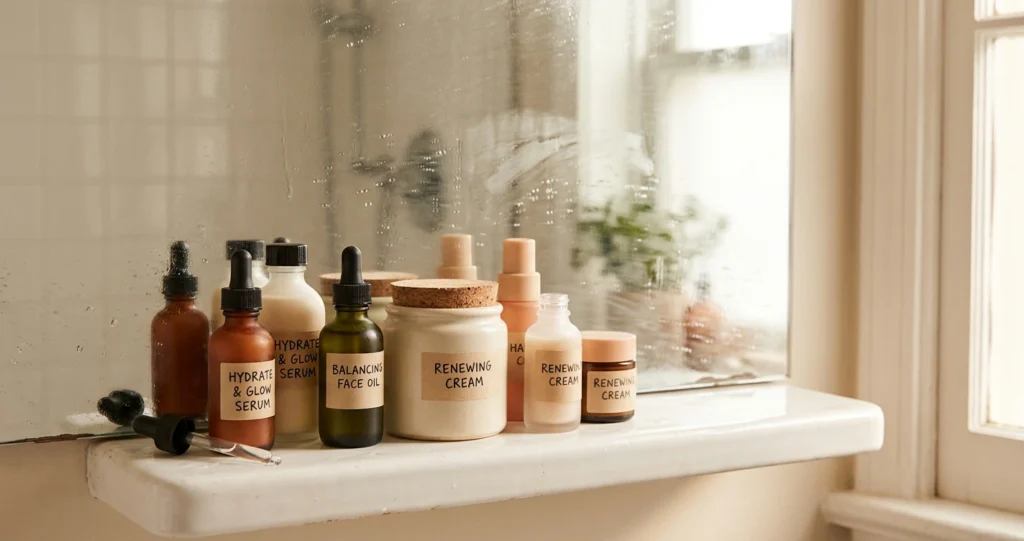
Every hot shower turns your bathroom into a steam room. That repeated cycle of heat and humidity is hard on every jar in there, and the damp also invites mould and bacteria around lids and pumps. Your beautiful shelfie by the window is the second trap, because direct sunlight both heats and photo-degrades whatever it touches.
Better homes for your routine are:
- A bedroom drawer or cupboard, away from windows.
- A shelf in an air-conditioned room, if you have one.
- A dedicated beauty fridge or a cool corner of your kitchen fridge for the fragile actives.
You do not need to refrigerate everything, and some thick creams can get unpleasantly stiff when cold. Save the fridge for vitamin C, sheet masks, eye creams and anything natural. Everything else just wants cool, dark and dry.
Travel and Daily Handling Tips
Storage is not only about the shelf. The way you handle products through the day, and how you pack them for a trip, decides a lot too.
For daily use, the simplest habit is the most powerful: close lids tightly and close them fast. Every minute a jar sits open, warm humid air and bacteria drift in. Screw the cap back on the moment you are done.
- Keep hands out of jars. Fingers carry oils and microbes straight into the product. Use a clean spatula for anything in an open tub, or choose pump and tube packaging where you can.
- Do not decant into random containers. Transferring a serum into a cute unsterile jar exposes it to air and germs and strips away the protective packaging the brand chose for a reason.
Travel is where products take the most abuse. A handbag in a parked car can hit oven-like temperatures within minutes, and a suitcase in a hot boot is not much kinder.
- Never leave skincare in a parked car, even for a short stop.
- On the road, keep your routine in your carry-on or a small insulated pouch rather than a checked bag that may sit on hot tarmac.
- For beach or upcountry trips, a simple cooler bag with an ice pack keeps your sunscreen and serums happy.
- Buy travel sizes or decant into clean, sterilised travel bottles only right before you leave, and use them up quickly.
A little planning here means you come home with products that still work, not a bag of warm, separated creams.
How to Tell If Your Skincare Has Turned
Your senses are a surprisingly good lab. When a product spoils, it almost always tells you in one of three ways, even when the bottle is still half full.
- Smell. This is the clearest signal. If a cream that smelled fresh now smells sour, metallic, or just "off," trust your nose and stop using it.
- Texture. Watch for separation that will not stir back together, a new grainy or clumpy feel, or a lotion that has gone watery and thin. Oils turning sticky or a cream splitting into layers are both red flags.
- Colour. A serum that darkens, a white cream that yellows, or any unexpected colour shift usually means the actives have oxidised or something is growing.
Two more things to watch. If the packaging swells, leaks, or the pump stops working smoothly, treat that as a warning. And learn the little open-jar symbol printed on most products: a mark like "12M" is the Period After Opening, meaning you should use it within twelve months of first opening. In our heat, treat that number as a generous maximum rather than a guarantee.
When in doubt, throw it out. A spoiled product can irritate your skin or trigger breakouts, which costs you far more than the price of the jar. If you suspect a reaction is actually from a product that no longer suits you rather than one gone bad, these signs you are using the wrong skincare are worth a read.
Skincare Storage Tips That Stretch Shelf Life
Good storage is the foundation, but a few everyday habits squeeze extra months out of every product.
- Buy what you will actually finish. A giant tub is poor value if half of it spoils before you reach the bottom. Smaller sizes stay fresher, especially for fragile actives.
- Finish the open ones first. Resist starting five new products at once. The clock on that open-jar symbol starts the day you break the seal, so work through what is already open.
- Keep the box and the dark bottle. Packaging is not just pretty. Opaque bottles and outer boxes block light, which protects the formula. Do not transfer products out of them.
- Mind the order you open things. Store backups sealed and cool, and only open the next one when the current bottle is nearly done.
- Choose formulas suited to the climate. Lightweight, well-formulated products designed for humidity hold up better day to day. A trimmed-down routine also means fewer bottles ageing on your shelf, which keeps everything fresher.
Each habit is small on its own. Stack them together and you protect both your skin and your budget.
Building Storage Into Your Routine
The easiest way to store skincare well is to make it automatic, so you never have to think about it. Set up a simple system once and your products take care of themselves.
Pick one cool, dark drawer or shelf as your skincare home base, nowhere near a window or the shower. Keep your daily morning and evening products together there so your routine stays quick. Park your most fragile actives, the vitamin C and the sheet masks, in the fridge, and keep backups sealed in their boxes in a cupboard until you need them.
Do a quick shelf check once a month. Smell and glance at each product, bin anything that has turned, and note what is running low. Five minutes saves you from reaching for a spoiled jar on a busy morning.
Conclusion
Tonight, do one small thing: move your vitamin C serum and your sunscreen out of the bathroom and into a cooler, darker spot in your bedroom. That single swap protects two of the hardest-working, most heat-sensitive products in your routine, and it costs you nothing.
If you are refreshing your lineup for the climate, browse the humidity-friendly Korean skincare at Online Beauty Bar and give your new picks a cool home from day one. Your skin, and your wallet, will thank you for it.
Frequently asked questions
Should I keep my skincare in the fridge in Sri Lanka?
You do not need to refrigerate everything, but a cool spot helps. Vitamin C serums, sheet masks, eye creams and natural or preservative-light products last noticeably longer in a fridge or beauty cooler.
Does heat really make skincare expire faster?
Yes. The FDA notes that heat makes preservatives break down and lets bacteria and fungi grow faster, so products stored in warm, humid spots turn sooner than the label suggests.
How do I know if my skincare has gone bad?
Check for a changed smell, a split or grainy texture, a new colour, or any separation that will not mix back together. Any of these means it is time to toss it.
Where is the best place to store skincare at home?
A cool, dark, dry spot away from sunlight and shower steam. A bedroom drawer or a shelf in an air-conditioned room beats the bathroom cabinet in Sri Lanka's climate.
What does the little open-jar symbol on my products mean?
That is the Period After Opening symbol. A number like 12M means the product stays good for twelve months after you first open it, assuming you store it properly.