

Key takeaways
- Layer products thinnest to thickest: cleanser, second cleanser, toner, essence, serum, eye cream, then night cream.
- Oily skin can skip or lighten the night cream; dry skin should double up on hydrating layers and seal with a richer cream.
- Giving each layer 30 to 60 seconds to absorb is the single biggest fix for products that pill or sit on the skin.
- You do not need all seven steps every night. A tired-night version is cleanser, toner, serum, and moisturizer.
The correct order for a Korean night skincare routine is simple: go thinnest to thickest. You cleanse twice, then layer toner, essence, serum, eye cream, and a night cream, in that order, so each product can actually sink in instead of sliding off the one before it.
That order is the whole secret. Most people own decent products. They just put them on in the wrong sequence, or pile them on too fast, and wonder why nothing seems to work.
This guide walks you through the full korean night skincare routine step by step. You will learn why the layering order matters, how to adjust it for oily, dry, or combination skin, the mistakes that quietly waste your money, and how to shrink the whole thing down on nights when you are falling asleep standing up.
K-beauty is not a passing trend, either. The global K-beauty market is set to grow from $12.43 billion in 2025 to $13.24 billion in 2026, at a 6.4% annual growth rate (The Business Research Company, 2026). A lot of people are buying these products. Fewer know how to use them well.

Why Does Korean Skincare Use So Many Steps?
The logic behind multi-step layering is that each product does one job well, and thin layers absorb better than one heavy one. Your skin can only take in so much at once. Several light layers of water, then oil, give it more to work with than a single thick cream dumped on top.
Think of it like getting dressed. You do not pull on a winter coat before a shirt. You build up from the light base to the warm outer layer. Skincare works the same way.
There is also a timing reason the routine happens at night. Your skin shifts into repair mode while you sleep. Blood flow to the skin rises, cell turnover speeds up, and the barrier that keeps moisture in is at its most active in the evening and overnight. That is the window the Korean night routine is built around.
So the steps are not about doing more for the sake of it. Each one feeds the next. The toner preps the skin to drink in the essence. The essence makes the serum work harder. The night cream locks it all in. Skip a layer and the chain still holds. Pile them on in the wrong order and it breaks.
If you are new to the whole philosophy, our complete K-beauty guide for Sri Lanka is a gentle place to start before you build out a full routine.
What Is the Correct Order for a Korean Night Routine?
The order, from first to last, is: oil cleanser, water cleanser, toner, essence, serum, eye cream, night cream. You always move from the thinnest, most watery textures to the thickest, richest ones. Here is what each step actually does.
Step 1: Oil-Based Cleanser
Start with an oil cleanser on dry skin, before you splash any water. Oil grabs onto oil. That means it melts away sunscreen, the day's grime, and any makeup far better than a foaming wash can on its own.
Massage it in for about a minute, then add a little water to turn it milky and rinse. Your face should feel clean but not tight.
Step 2: Water-Based Cleanser
This is the second half of what Korean skincare calls double cleansing. A gel or foaming wash now clears away sweat, dust, and anything the oil left behind. Two gentle cleansers beat one harsh one that strips your skin raw.
Keep the water lukewarm. Hot water feels nice but it pulls moisture out of the skin and leaves it tight.
Step 3: Toner
Forget the stingy, alcohol-heavy toners that leave your face squeaky. A Korean toner is a watery layer that rebalances your skin and preps it to absorb everything after. Pat it in with your hands or a cotton pad.
Step 4: Essence
Essence is the heart of a Korean routine and the step most beginners skip. It is a lightweight, hydrating liquid that sits between toner and serum. Think of it as a drink of water for your skin that helps the next layers work better.
Step 5: Serum
Now the targeted step. Your serum is where you treat a specific concern: brightening for dark spots, niacinamide for oil control, or hydrating ingredients for dryness. A few drops is plenty. More does not mean faster results.
Step 6: Eye Cream
The skin around your eyes is thin and shows tiredness first. Dab a rice-grain amount with your ring finger, which presses the softest. Tap, never drag.
Step 7: Night Cream
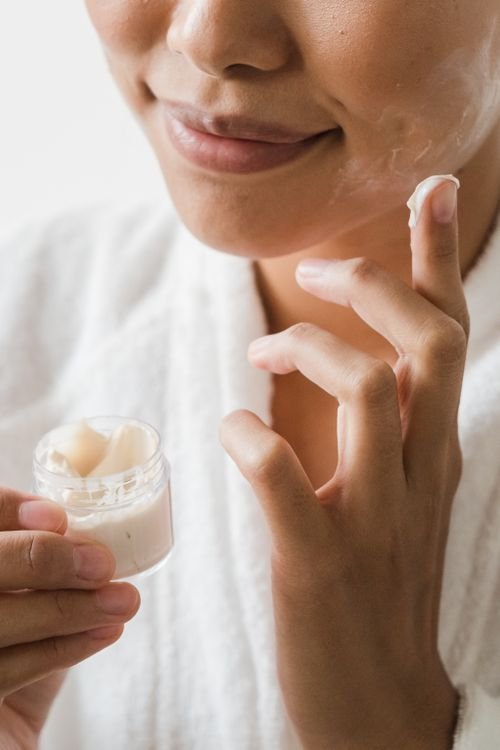
The final seal. A night cream is richer than a daytime moisturizer because it has all night to work with no sunscreen on top. It locks every layer underneath against your skin so nothing evaporates while you sleep. A good night cream for dry or acne-prone skin is the step most worth spending on.
How Do You Adjust the Routine for Oily Skin?
If your skin gets shiny by midday, keep all seven steps but make every texture lighter. Oily skin still needs water and barrier support. It just does not need heavy oils sitting on top, which can trap congestion and feel greasy overnight.
Here is how to lighten the routine:
- Keep both cleansers. Oily skin benefits most from double cleansing because it clears excess oil and buildup.
- Choose a gel or watery toner, not a milky one.
- Keep the essence. It hydrates without weight, which actually helps oily skin stop overproducing.
- Pick a niacinamide or lightweight brightening serum for oil control.
- Swap the thick night cream for a gel moisturizer or a lighter lotion.
A common worry is that moisturizer makes oily skin worse. The opposite is usually true. When you strip oil away and skip the cream, your skin panics and pumps out even more oil to compensate.
How Do You Adjust the Routine for Dry Skin?
For dry skin, lean into the hydrating layers and seal hard at the end. Dry skin loses water fast overnight, so the goal is to layer in as much moisture as you can and then trap it with a richer cream.
Try this version:
- Go easy on the water cleanser, or use a cream cleanser, so you do not strip your skin.
- Apply your toner while your face is still slightly damp. Damp skin holds water better.
- Layer the essence twice if your skin drinks it up. Pat, wait, pat again.
- Use a hydrating serum with ingredients like hyaluronic acid.
- Finish with a genuinely rich night cream, and add a thin layer of facial oil on top if winter air leaves you flaky.
Dry, sensitive skin also does better with fewer active ingredients at once. Pick one treatment serum and let it do its job rather than stacking three.
What About Combination Skin?
Combination skin means treating different zones differently, usually an oily T-zone with drier cheeks. The trick is to layer for the drier areas and spot-adjust the oily ones, not to pick one extreme for your whole face.
Keep the full routine, then adapt at the end:
- Apply your hydrating layers all over, cheeks included.
- Use your night cream generously on the cheeks and jaw.
- On the forehead, nose, and chin, use a thinner layer, or a lighter gel, so the T-zone does not get greasy.
You can also multi-mask the idea into your serums. A brightening or oil-control serum on the T-zone, a hydrating one on the cheeks. It sounds fiddly. After a week it takes seconds.
What Are the Most Common Layering Mistakes?
The biggest mistake is rushing, slapping each layer on before the last one has absorbed, which makes products pill and roll off. If you have ever seen little balls of product on your face, that is pilling, and it means your layers are fighting instead of sinking in.
Here are the mistakes worth fixing first:
1. Not waiting between layers. Give each one 30 to 60 seconds. This single habit fixes most pilling and sticky-skin complaints.
2. Applying to bone-dry skin when you should apply to damp. Hydrating toners and essences work best on slightly damp skin. Let your face air-dry a few seconds after cleansing, not fully.
3. Using too much product. More serum does not absorb faster. It just sits there, pills, and gets wiped onto your pillow. A few drops is the right amount.
4. Stacking strong actives on the same night. Piling retinol, acids, and vitamin C together is a fast route to a stinging, flaky barrier. Introduce one active at a time and space them out.
5. Skipping the final moisturizer. Every hydrating layer underneath evaporates without a cream to seal it. The night cream is not optional. It is what makes the rest of the routine pay off.
One more from experience: people treat their neck and jawline like they do not exist. Bring every layer down past your chin. Your neck ages too, and it is the first place a rushed routine shows.

How Can You Simplify the Routine on Busy Nights?
On a tired night, drop to four steps: cleanse, tone, serum, moisturizer. A shorter routine you actually do beats a seven-step one you skip entirely because you are too wiped out. Consistency matters more than completeness.
Here is a quick framework for how much time you have:
- Two minutes: One cleanse, then night cream. That is it. Clean skin plus a seal is never a wasted night.
- Four minutes: Cleanse, toner, serum, night cream. The essential core.
- Full routine: All seven steps, for the nights you have the time and want the extra glow.
A few time-savers that help on weeknights:
- Keep your night products in the order you use them, left to right, so you are not hunting for the next bottle.
- Use multitasking products. A moisturizer with built-in brightening ingredients collapses two steps into one.
- Pre-soak a cotton pad with toner so step three is ready the moment you finish cleansing.
- Pat, do not rub. Patting is faster and pushes product in instead of smearing it around.
The point of a night routine is not perfection. It is showing up most nights with clean, moisturized skin. Do that for a few weeks and you will see the difference before any single expensive product does.
Putting Your Night Routine Together
Pick the four-step core and do it every night this week, in the thinnest-to-thickest order, before you worry about adding essence or eye cream. Once the basics feel automatic, layer in one new step at a time and notice how your skin responds.
If you want help choosing which cleanser, serum, and night cream suit your skin type and your budget, browse the Korean-inspired sets at Onlinebeautybar and start with the one concern bothering you most. Build the routine around that, not around owning every bottle. Your skin at the end of the month will thank you.
Frequently asked questions
What is the correct order for a Korean night skincare routine?
Cleanse with an oil-based cleanser, follow with a water-based cleanser, then apply toner, essence, serum, eye cream, and finish with night cream. The rule is thinnest texture first, thickest last.
Can I do a Korean night routine if I have oily skin?
Yes. Keep the toner and serum steps, but choose gel or water-based textures and use a lightweight moisturizer instead of a heavy night cream so your skin does not feel greasy.
How long should I wait between each skincare layer?
Wait 30 to 60 seconds between layers so each one absorbs before the next goes on. Rushing is the main reason products pill, roll off, or feel sticky.
Do I really need all seven steps every night?
No. Seven steps is the full version for nights you have time. On busy nights, a four-step routine of cleanser, toner, serum, and night cream still does the job.
Which step matters most in a Korean night routine?
Cleansing and your final moisturizer matter most. Clean skin lets everything else absorb, and the night cream seals in all the layers underneath while you sleep.