
Key takeaways
- Apply toner within a minute of cleansing while your skin is still slightly damp, so it absorbs instead of evaporating.
- Hands are gentler and waste less product than cotton pads; save pads for sweep-off or exfoliating toners.
- Layering a hydrating toner in two or three thin passes beats one soaked pad for plumper, calmer skin.
- Skip alcohol-heavy astringents if your skin feels tight, flaky or sensitive; they strip more than they help.
- Match the toner to one concern at a time: hydration for dryness, gentle acids for acne or dark spots.
Most people use toner wrong, and it is usually one of two things: wrong timing, or too much product on a dry cotton pad. The fix is simple. Apply a few drops within a minute of cleansing, press it in with damp hands, and follow quickly with your next step. Do that and a good toner stops being a forgettable extra and starts doing real work for your skin.
If you have ever wondered whether you are getting any benefit from your toner, this guide walks through exactly how to use face toner the right way. We will cover timing, cotton pad versus hands, layering for extra hydration, the mistakes that quietly waste half your bottle, and how to pick a toner for your specific concern.
A quick note on what toner actually does today. Older toners were harsh, alcohol-based astringents meant to strip oil. Modern Korean-style toners are the opposite: lightweight, water-like liquids that add a first layer of hydration and help the steps after them absorb. Knowing which type you have changes everything about how you use it.
What a toner is really for
Think of toner as the bridge between cleansing and the rest of your routine. Cleansing removes dirt and oil, but it also leaves your skin a little thirsty and slightly off-balance. A hydrating toner replaces that lost moisture and preps the surface so your serum and moisturiser sink in instead of sitting on top.
There is a science reason this matters. Healthy skin sits on the acidic side, with a surface pH that clinical studies place around 4.5 to 5.5. In one study of 400 people, healthy controls had a mean skin pH of 5.09, while acne-prone skin ran noticeably more alkaline at 6.35, and 93% of the healthy group fell in the normal range compared with only 22% of the acne group (Skin Surface pH in Acne Vulgaris, NIH). Washing your face, especially with a basic soap or hard tap water, nudges that pH upward for a while. A well-formulated toner helps your skin settle back toward its comfortable, slightly acidic zone faster.
So the job of a modern toner is mostly this: rehydrate, rebalance, and prep. Not strip. If your current toner leaves your face feeling tight or squeaky, it is doing an outdated job.
When to use face toner: the right time to apply
Timing is the single biggest thing people get wrong. Toner goes on right after you cleanse, before anything else, and speed matters more than you would think.
Here is the window: apply your toner within about 60 seconds of patting your face dry, while the skin is still very slightly damp. Damp skin holds onto water-based products better, so you lose less to evaporation and get more actual hydration where you want it.
A simple morning versus night flow looks like this:
- Morning: Cleanse (or just rinse with water), apply a hydrating toner, then serum, moisturiser, and sunscreen. Sunscreen is non-negotiable if you want any brightening or dark-spot work to hold.
- Night: Double cleanse if you wore makeup or sunscreen, apply toner, then your treatment step (such as an acid or a targeted serum), then a richer night cream.
If you want the full step-by-step for an evening routine, our guide on how to layer a Korean 7-step night skincare routine shows exactly where toner sits and what follows it.
One more timing note. Do not let your face fully dry between cleansing and toner, and do not wait several minutes "for your pores to close." Pores do not open and close like doors. The only clock that matters is the few seconds while your skin is still damp.
Cotton pad vs hands: which is better
This question causes more debate than it should, and the honest answer is that it depends on your toner and your skin. Both work. They just suit different situations.
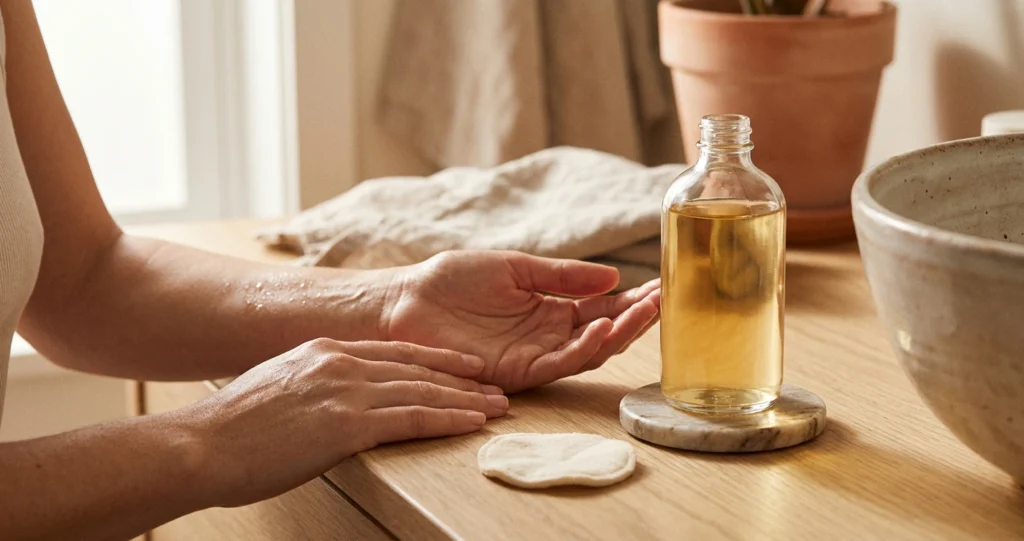
Using your hands is the gentlest option and wastes the least product. You pour a few drops into clean palms, warm it for a second, then press and pat it into your face and neck. Patting, not rubbing. This method is ideal for hydrating, watery toners because almost all of the liquid ends up on your skin rather than soaked into a pad.
Using a cotton pad has two real jobs:
- Sweeping off residue. If you want to lift away the last traces of cleanser, hard-water minerals or leftover makeup, a damp cotton pad does that in one gentle swipe.
- Even application of active toners. Exfoliating toners with acids spread more evenly with a pad, which lowers the chance of applying too much in one spot.
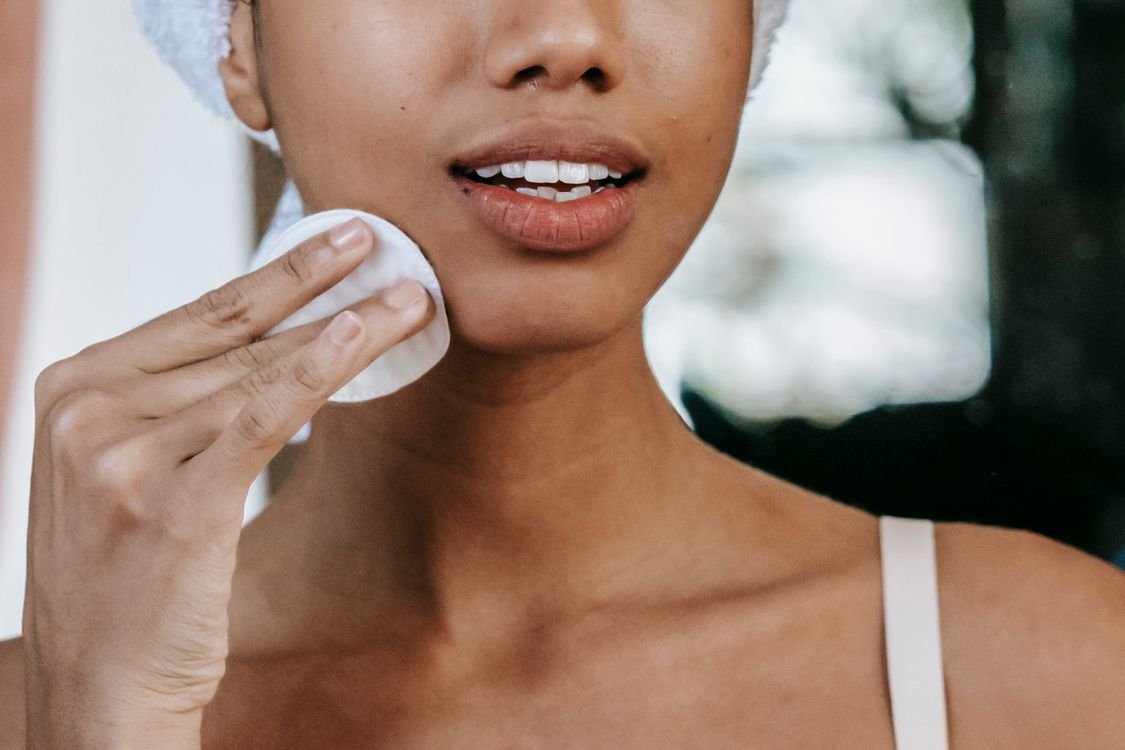
The downside of pads is waste. A dry cotton pad can absorb a surprising amount of your toner before any of it reaches your face, and rough swiping can irritate sensitive or acne-prone skin. If you use a pad, soak it just enough to be damp, not dripping, and glide, never scrub.
Quick rule of thumb: hydrating toner, use hands. Exfoliating or clean-up toner, use a damp pad. If your skin is reactive or you are dealing with active breakouts, lean toward hands and keep acids to a minimum until your skin settles.
Layering toner for extra hydration
If you have dry, dehydrated or thirsty-looking skin, this is where a toner earns its place. Instead of one heavy pass, you apply a hydrating toner in several thin layers, letting each one sink in before the next.
This is the idea behind the Korean "7 skin method," where "skin" is the Korean word for toner. You do not literally need seven layers. The point is that thin, repeated passes hydrate more effectively than a single soaked application, because each layer adds moisture without overwhelming the skin.
Here is a beginner-friendly version:
- Cleanse and pat your face until it is just barely damp.
- Press a few drops of hydrating toner into your skin with your hands.
- Wait 20 to 30 seconds until it feels tacky rather than wet.
- Repeat two or three times total, focusing extra passes on dry areas like cheeks.
- Follow with serum and a night cream to seal everything in.
Layering works best at night, when your skin does most of its repair, and it pairs beautifully with a dry-skin night cream. Save heavy layering for evenings; in the morning one or two passes under sunscreen is plenty, especially in humid weather where your skin is less likely to feel parched.
A caution: only layer hydrating toners. Never layer an exfoliating or alcohol-based toner this way, because repeating acids or astringents several times will irritate and dehydrate your skin, the exact opposite of the goal. If your barrier already feels compromised, pause actives and focus on gentle repair first.
Toner mistakes that waste product
Small habits quietly drain your bottle and your results. Here are the most common ones and the quick fix for each.
- Pouring toner onto a dry cotton pad. The pad drinks most of it. Fix: dampen the pad first, or switch to hands for hydrating toners.
- Waiting too long after cleansing. Dry skin absorbs less. Fix: apply within about a minute, while damp.
- Using an astringent toner on already-dry skin. This strips the little moisture you have. Fix: match the toner to your skin, covered in the next section.
- Rubbing hard with a pad. Friction irritates and can worsen breakouts. Fix: press and glide gently.
- Flooding your face in one go. Excess just runs off or evaporates. Fix: a few drops layered thinly beats a palmful all at once.
- Treating toner as a standalone step. Toner is a primer, not a finisher. Fix: always follow quickly with serum or moisturiser so you lock the hydration in.
If several of these sound familiar, it may be a sign your products and your skin are mismatched. A quick gut-check of your whole routine is worth it before you buy anything new.
Choosing a toner for your concern
The best toner is the one that fits the single concern you most want to fix right now. Trying to solve everything at once is how skin gets confused and irritated. Pick one focus, then choose accordingly.
Dry or dehydrated skin. Look for hydrating toners with humectants such as glycerin, hyaluronic acid or panthenol. These are the toners you layer. Skip anything listing alcohol near the top of the ingredient list.
Acne-prone or oily skin. Gentle is still the rule. A lightweight hydrating toner suits daytime, and a mild exfoliating toner with a low percentage of salicylic acid, used two to three nights a week, can help with congestion. Remember that acne-prone skin tends to run more alkaline, so a balancing, non-stripping toner supports it better than a harsh astringent.
Pigmentation and dark spots. Reach for toners with niacinamide or gentle brightening ingredients, and always pair them with daytime sunscreen, because unprotected sun undoes brightening work. Consistency over weeks matters far more than any single strong product.
Sensitive or reactive skin. Choose fragrance-free, alcohol-free hydrating toners with soothing ingredients like centella (cica) or aloe. Apply with hands, patch test first, and introduce one new product at a time.
If you are still unsure which toner type you own, learning to read the ingredient label takes the guesswork out. The order of ingredients tells you whether a toner is mainly water and humectants or mostly alcohol.
How toner fits with your other products
A toner rarely works alone, and understanding where it sits stops you from doubling up or skipping something important.
The classic order after cleansing is toner, then essence, then serum, then moisturiser, with sunscreen last in the morning. Each product is a little heavier than the one before, which is the logic of layering thin to thick.
People often confuse toner, essence and serum because they overlap. Toner is the lightest and comes first, essence is a nourishing middle step, and serum carries concentrated actives. If that trio still feels blurry, our explainer on toner vs essence vs serum sorts it out in plain language.
You do not need all four. A simple, effective routine can be cleanser, hydrating toner, moisturiser and sunscreen. Add an essence or serum only when you have a specific reason, such as targeting dark spots or boosting hydration in dry weather.
Making toner work in Sri Lanka's climate
Our humidity changes the maths a little, and it is worth adjusting for. In hot, sticky weather your skin loses less water to the air, so you rarely need heavy layering during the day. One light pass of a water-based hydrating toner in the morning usually feels better than three.
At night it is a different story, especially if you spend the day in air-conditioning, which is drying. That is when layering a hydrating toner pays off, followed by a night cream suited to your skin type. If your skin leans oily, a lighter gel-style night cream over your toner keeps things comfortable without feeling heavy.
A few climate-friendly habits:
- Store water-based toners somewhere cool and out of direct sun so they stay stable.
- In humid months, favour lightweight, non-sticky toners over rich, thick ones for daytime.
- If you sweat a lot, a quick refresh of toner after cleansing in the evening helps rebalance skin that has been exposed to heat and pollution all day.
Adapting a routine to local conditions mostly comes down to going lighter by day and richer by night, then adjusting as the seasons shift.
At Onlinebeautybar, we stock Korean-inspired hydrating and polishing toners chosen for exactly this kind of climate, with island-wide delivery and installment-friendly pricing so you can build a routine at your own pace. If you are shopping, start by naming your one main concern, then pick the toner that matches it, rather than buying the one with the longest ingredient list.
Your next step is small and easy: tonight, apply your toner within a minute of cleansing, press it in with damp hands instead of a dry pad, and follow straight away with your moisturiser. Give it two weeks of doing just that, and you will feel the difference in how your skin drinks up everything that comes after.
Frequently asked questions
Do I use toner in the morning and at night?
Yes, twice daily works for most people. A hydrating toner is fine morning and night, while exfoliating or acid toners are best used at night only, two to three times a week.
Can I skip toner if I use a serum and moisturiser?
You can, but a hydrating toner preps damp skin so your serum and moisturiser absorb better. It is a helpful step, not a mandatory one.
Is it better to apply toner with hands or a cotton pad?
Hands are gentler and waste far less product, which suits hydrating toners. Use a cotton pad only when you want to lift off residue or apply an exfoliating toner evenly.
How long should I wait after toner before the next step?
Just a few seconds. Apply your essence, serum or moisturiser while the toner still feels slightly damp so it locks in the extra moisture.